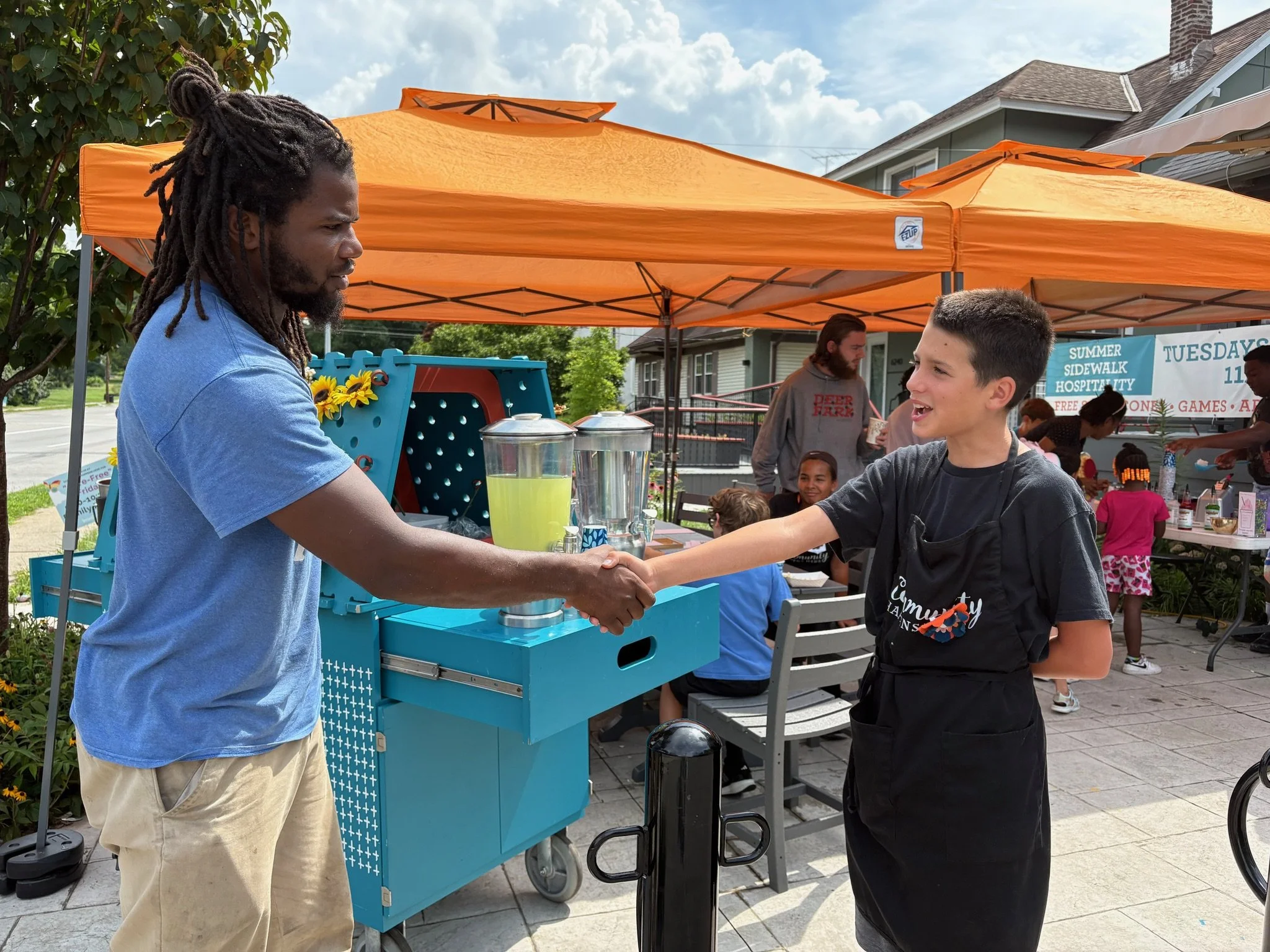
It’s all about the sidewalk.
Every Saturday, we open our doors because we believe the most powerful thing a neighborhood can do is show up for each other.

📅 Every Saturday, 11am–1pm
📍 6238 Montgomery Rd
🆓 Always free, always open
Hospitality isn't an event. It's a posture.
Sidewalk Hospitality isn't a program we run. It's a way of being in the world. It begins with a radical premise — that the simple act of making space for another person is one of the most transformative things a community can do.
In a culture that sorts people by income, race, education, and ideology, we believe that a cup of coffee or lemonade shared on the sidewalk can dissolve the boundaries that keep us apart. Not because the beverage is special, but because the welcome is real.
We don't require RSVPs. We don't ask anyone to register. We don't need you to believe the “right” things or know the “right” people. Sidewalk Hospitality exists to make one thing unmistakably clear: You belong here.
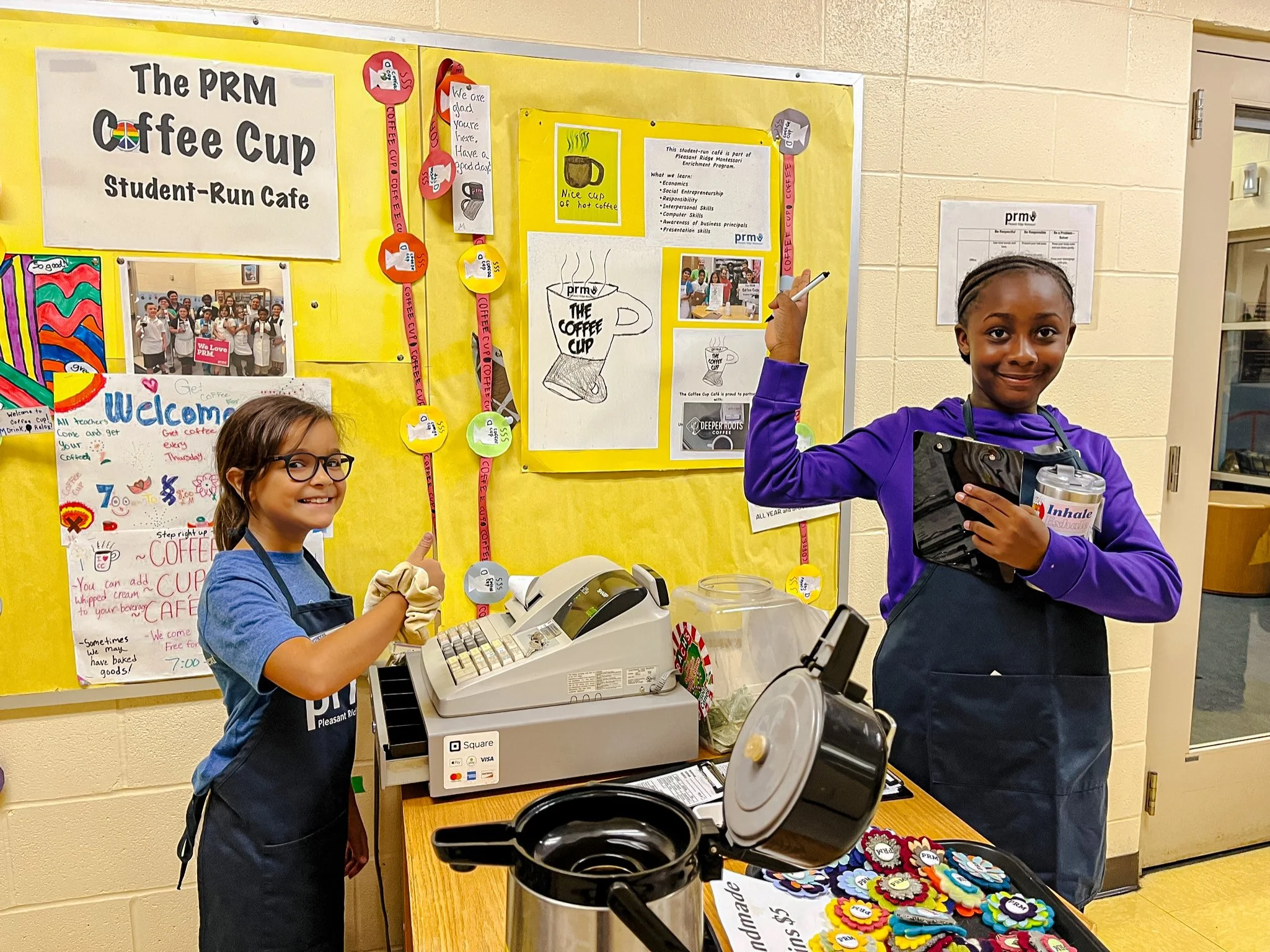
This approach grew from something our founder, Ruth Anne Wolfe, observed when she launched an entrepreneurship program at Pleasant Ridge Montessori School in 2010. As students served coffee to their community, something unexpected happened. Neighbors started lingering. Strangers started talking. Connections formed across lines of difference.
The coffee was a pretext.
The connection was the point.
Our Philosophy
Presence Over Programming
We don't overschedule our Saturdays. Sometimes connection happens over a shared art project. Sometimes it happens when two neighbors discover they live on the same street. The space is the invitation. What people do is up to them.
Across Difference
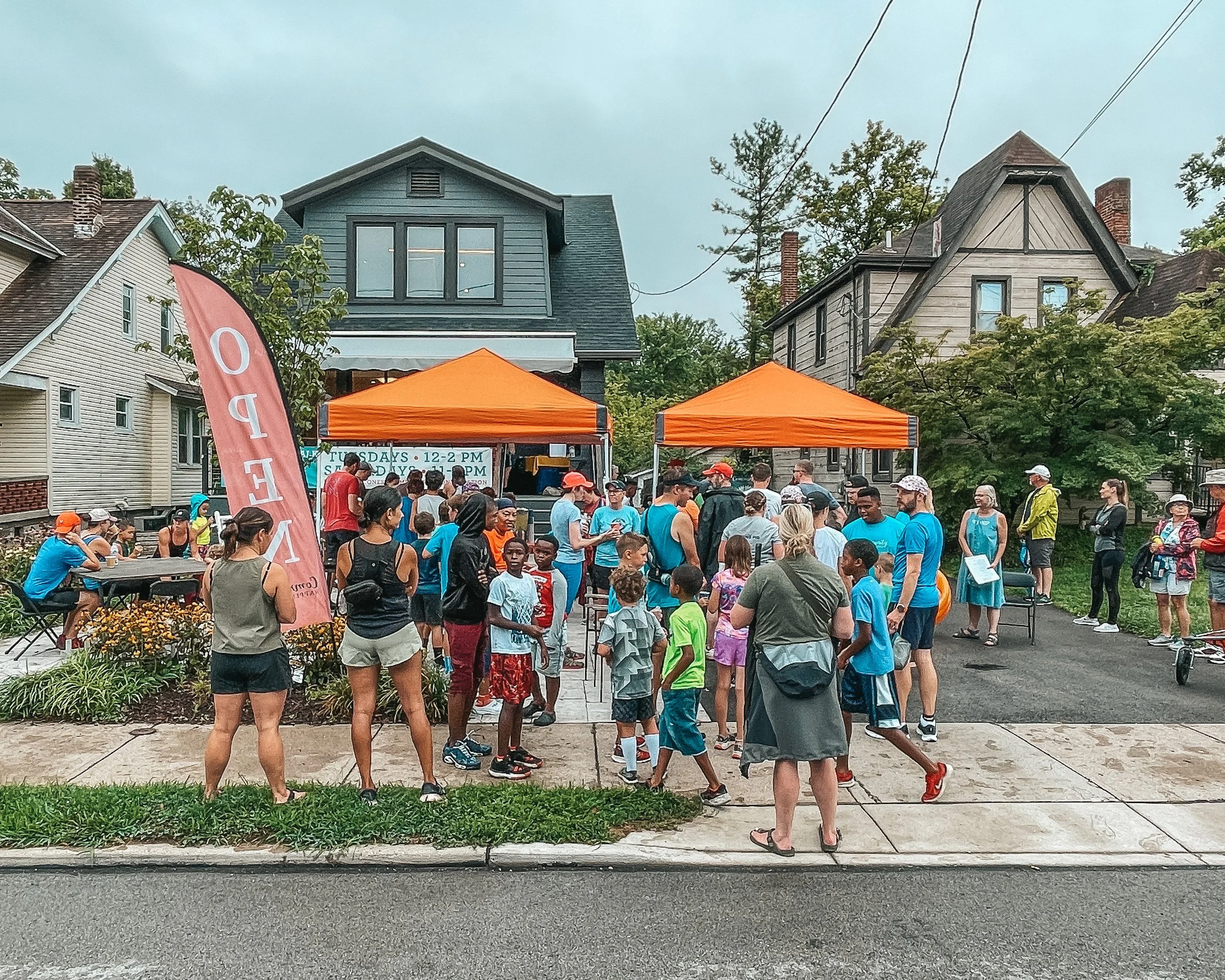
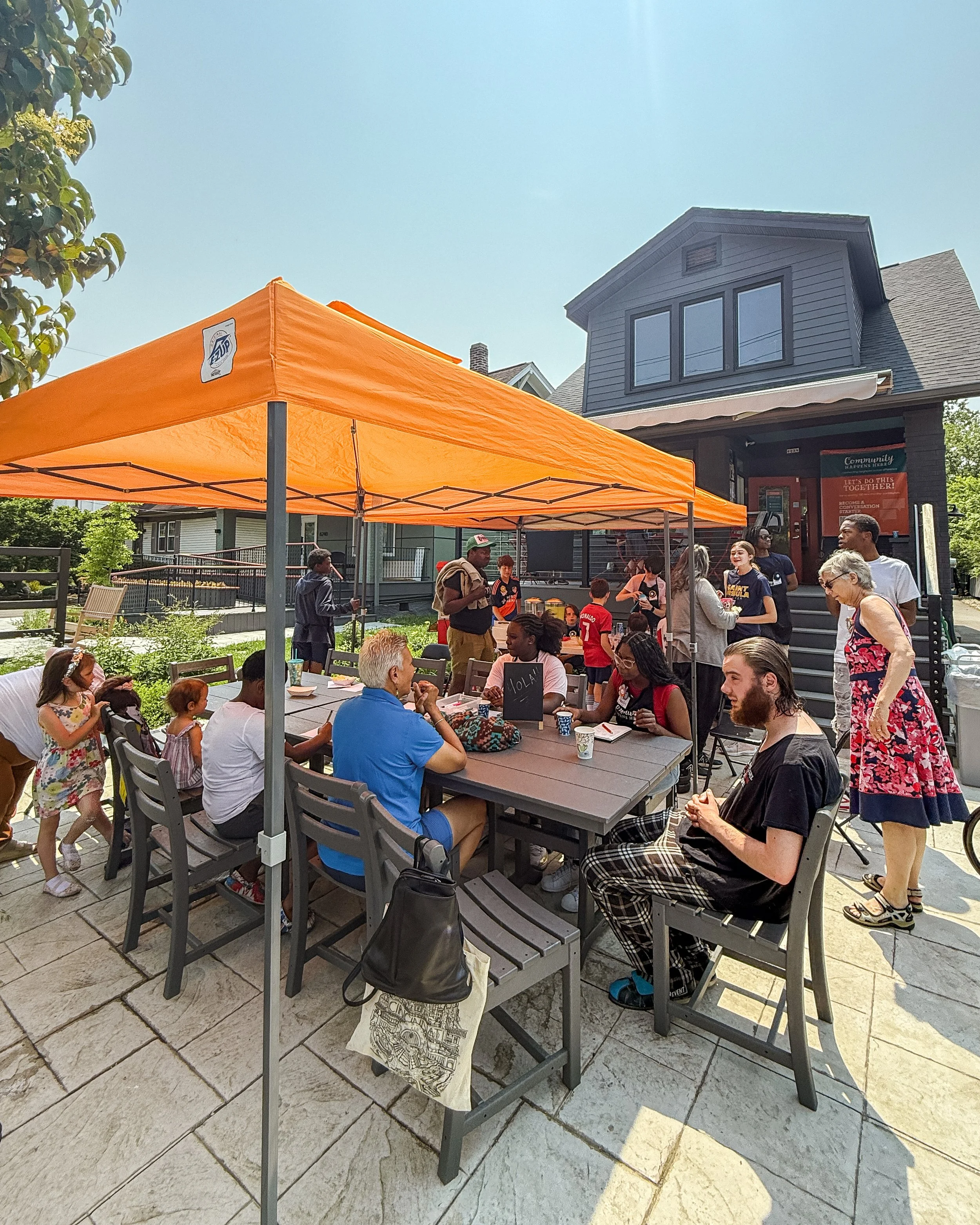
On a typical Saturday, 25–45 people show up. They vary in age, race, income, and life experience. The sidewalk is one of the few places left where a retired data scientist, a teenager, and a young parent can share the same table.
Consistency as Commitment
We show up every single Saturday, regardless of the weather. That consistency signals this is something deeper than a program. It signals a promise. This place will be here for you, whenever you're ready.
A Rhythm Designed for Connection
Every week looks a little different, but the bones of Sidewalk Hospitality remain the same. It’s built around a rhythm that invites people in gently and gives them permission to stay.
What Sidewalk Hospitality Looks Like
-
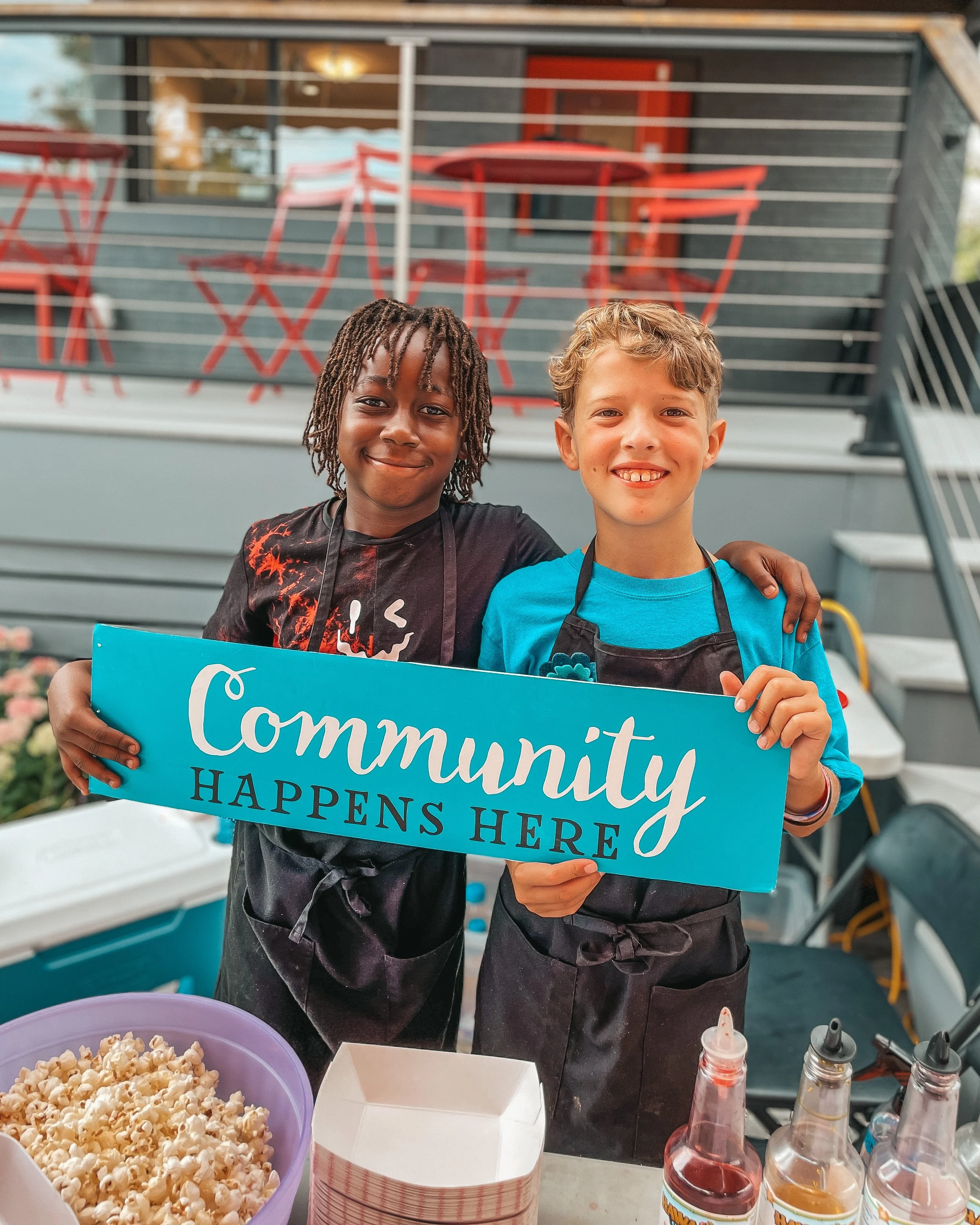
Our teen volunteers arrive early to set up. They pop popcorn, brew coffee, prepare art supplies, and arrange the sidewalk space. This is their operation.
-
The sidewalk comes alive. Neighbors start arriving — some regulars, some brand new. Teens greet each person, offer a warm drink, and create space for conversation. goes here
-
Art activities, games, live music, or simple conversation. Every Saturday has a different flavor. The constant is the warmth. Kids play. Adults talk. Neighbors become friends.
-
Our teen leaders clean everything up. As it happens, we debrief: What went well? Who did you meet? What did you notice? The reflection is part of the learning.
This program is powered by young people.
Sidewalk Hospitality isn't something adults do for teens. It's something teens do for their neighborhood. They are the face, muscle, and creative spark behind every Saturday gathering. In the process, they learn what it means to lead.
More Than Volunteering
Our teen leaders are students from local schools who sign up for this initiative to earn community service hours and develop real workplace skills. They learn to grind beans, brew coffee, craft lattes, and prepare snacks. But the deeper curriculum is human. It’s about introducing yourself with confidence, making eye contact with adults, engaging a stranger in conversation, and welcoming someone who looks uncertain.
After about three Saturdays, most teens can run the entire operation without much instruction. They set up, manage, troubleshoot, and clean up. They host art activities and guide neighbors through creative projects. They're not assisting. They're leading.
We teach them how to create a neighborhood where neighbors know neighbors, where playing chess and making art become ways to connect across difference by opening paths of communication. That's leadership development that no classroom can replicate.
The research says what our neighbors already know.
The World Health Organization's Commission on Social Connection found that strong social ties lower the risk of serious illness, protect mental health, and can prevent early death. The inverse is equally true. Isolation and loneliness significantly increase the risk of stroke, heart disease, diabetes, and cognitive decline.
Youth are especially affected. The WHO's 2025 report found that teens experience the highest rates of loneliness globally. Schools are doing important work, but community spaces provide something different — the chance to practice belonging in the real world.
Why This Matters

Sidewalk Hospitality is designed to be replicated.
We believe every neighborhood deserves a place like this. That's why we're building Sidewalk Hospitality as a scalable model.
The Model
Low Barrier
No registration, no fee, no expectations. The only requirement is showing up. This makes connection accessible to everyone, especially those who need it most.
Youth Led
Teen leadership isn't a nice-to-have. It’s structural. Young people running the program inverts the typical power dynamic and builds civic identity in real time.
Consistent
Weekly gatherings create reliability. Neighbors know the space will be there. That consistency builds the trust that deeper connection requires.
Place-Based
It’s rooted in a specific neighborhood, not parachuted in. The model works because it emerges from the community it serves. It adapts to any community that adopts it.
Come Find Out For Yourself
Whether you're a neighbor looking for connection, a teen looking for purpose, or an organization looking for a model , there's a place for you here. We’d love to see you on the sidewalk.