I’ve worked in various nonprofits for 15 years.
That’s both a short time and a long time. I’m by no means an expert in the space. But I've been around long enough to have competed in grant cycles, navigated institutional slowness, worked through numerous organizational pivots, and developed what I'll call a “hard-won pragmatism” about the effort and time community transformation actually requires.
On my best days, it’s seasoned realism. In my tired moments, it might sound a bit like cynicism.
Whatever it is, it showed up this past Saturday morning, as the rain clouds lingered over our building and showers sprinkled off and on all morning. Because of the weather, our teens and I decided we should move Sidewalk Hospitality indoors. I’d already connected the dots in my head before the first cup of coffee was brewed.
Intermittent rain means low turnout. I've seen this movie a thousand times.
So, before our first guests arrived, I turned to our teen leaders, who had just finished setting everything up with incredible speed, and proposed an over-under bet.
“Ten guests,” I said. “Will we hit ten today?”
In my mind, I was already composing the lesson. As we cleaned up, I was prepared to talk about how consistency matters in community building. To remind our crew of why it’s important for us to keep creating space even when we don’t meet as many neighbors as we’d like.
But our teens weren’t buying it. “There will be way more than 10 people!” they replied.
They were right.
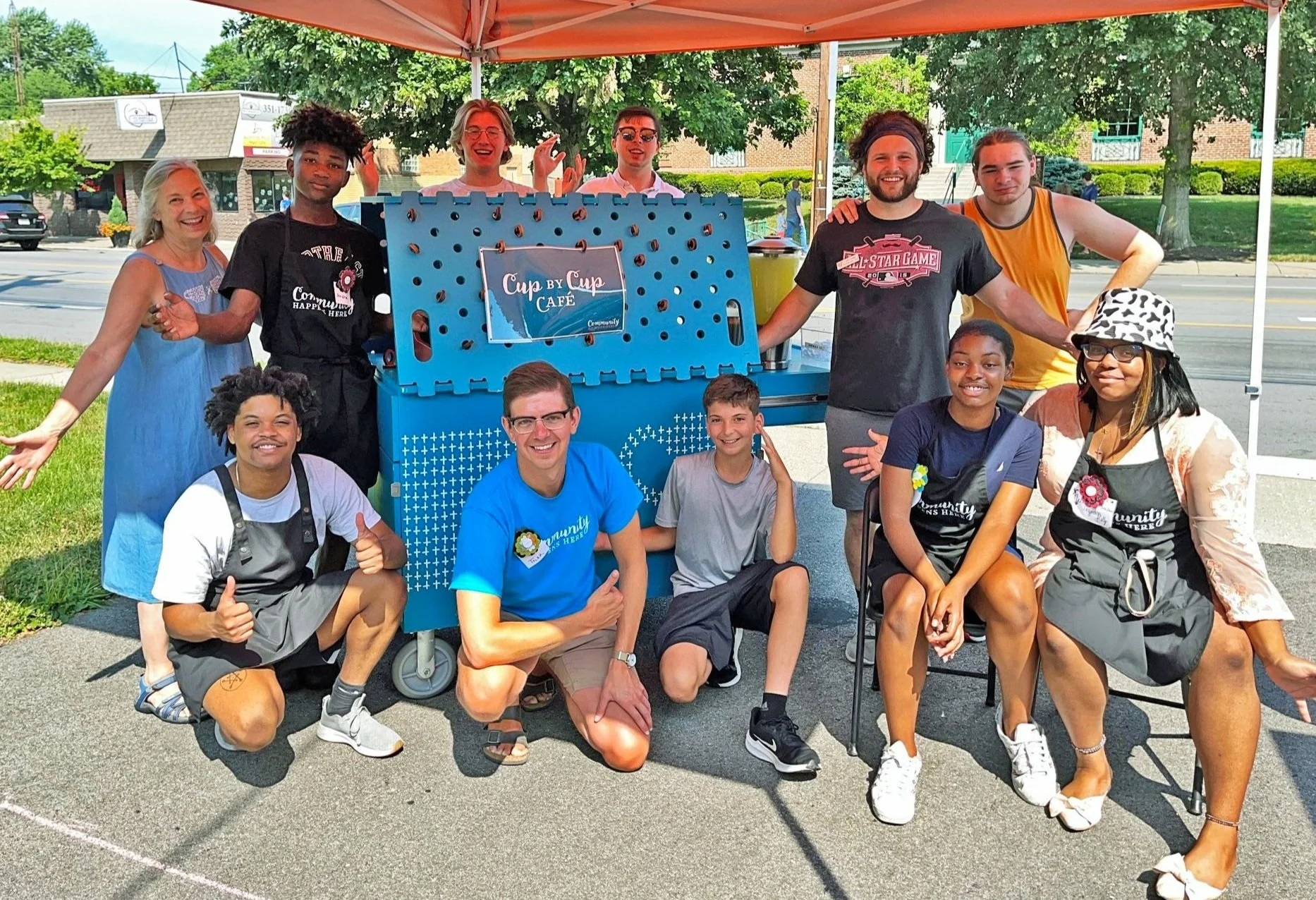
By the time Sidewalk Hospitality ended, more than 40 neighbors had moved through our space. They came for a free bike repair fair. For art. For a language exchange workshop. And for an organization’s planning meeting.
And the team that created the space for them to gather? Neighborhood teens.
They really are the secret to everything we do around here.
There is a certain kind of wisdom that comes with experience. Adults typically have had more time to learn how to manage expectations, navigate systems, and protect themselves from disappointment. But there is something that experience tends to quietly negotiate away. It's the kind of optimism that doesn't calculate the odds before commitment. The kind of hopefulness that just goes for it.
A few weeks ago, I was at a the Cincinnati Neighborhood Summit alongside one of our youth leaders. We'd go into breakout sessions and come out with completely different takeaways. I'd leave thinking, “Sure, I'll believe it when I see it.” And our teen would walk out of the same room and say, “Won't that be awesome when they actually do it?”
That's not naïveté. That's a gift. And in community building, it might be one of the most essential gifts there is.
Optimism isn't a soft skill in this work. It's load-bearing.
This Saturday, between the rain showers, our teens and I talked about why we do what we do. We recounted our basic beliefs: Communities need spaces for connection. We are the people who create those spaces.
Hearing them say it, seeing them mean it, and watching them build it energized me in a way I needed.
This weekend, I was reminded why it's essential for adults to do community building work alongside young people. Not as a pipeline strategy. Not as a programming checkbox. But because we all carry uniquely valuable perspectives.
Youthful optimism, when you let it, has a way of becoming yours again.
I'd counted us out. Our teens hadn't.
They were right to keep believing.