Here’s Your Sign
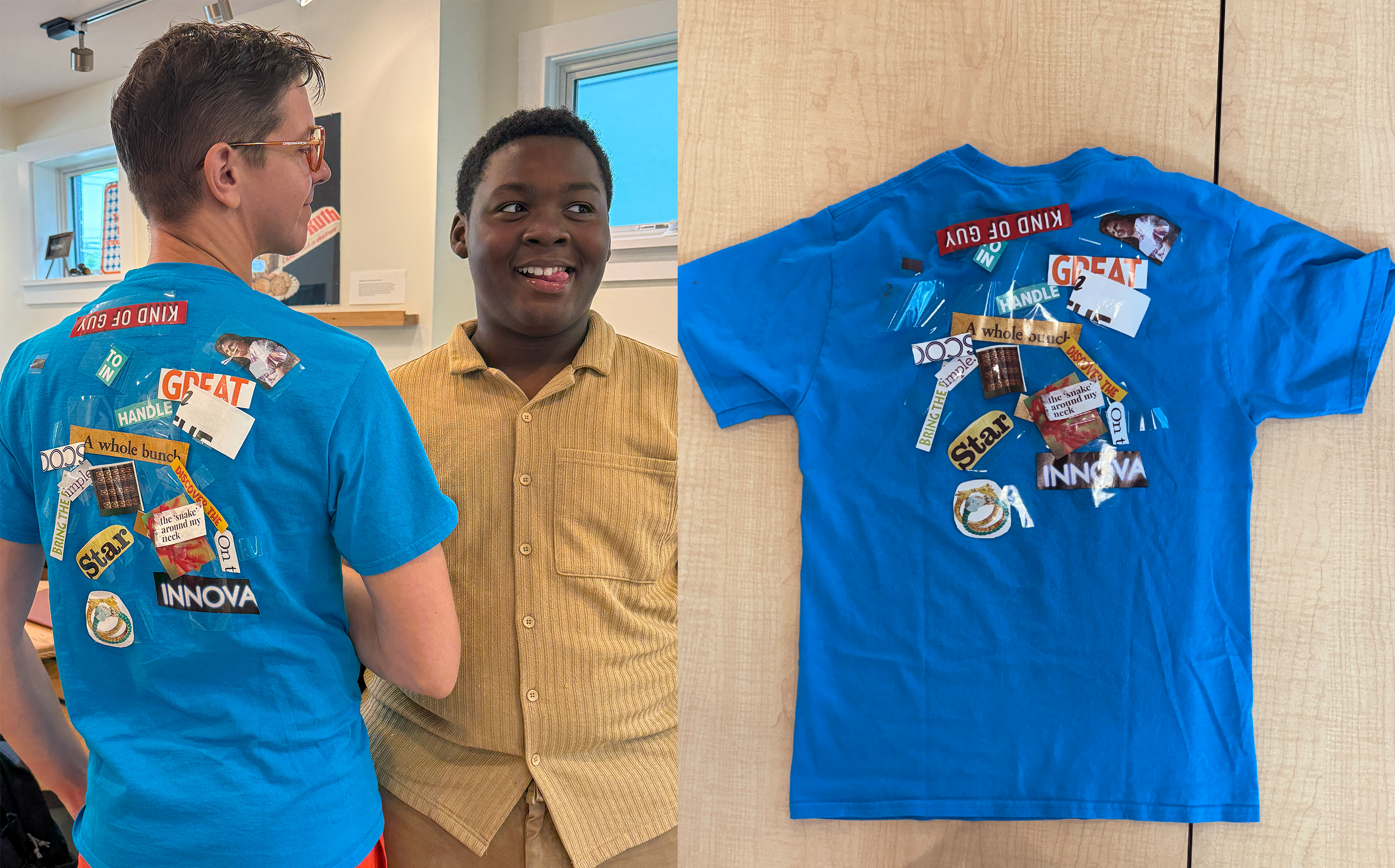
Once upon a time, a teenager taped something to my back.
He wasn't exactly subtle about it. I heard him shuffle up behind me, along with some stifled laughter. Then, there was slight pressure on my shirt.
I smiled and let it all unfold, because I knew exactly how much he and his pals were loving it.
I knew because I was one of them once.
I whispered jokes in the back of class, snuck Diet Coke from my grandma's fridge, bought candy bars at the gas station before riding my bike to a friend’s house, and pulled “pranks” on my middle school teachers. My pranks were, objectively, benign. But I felt like a criminal mastermind nonetheless.
So, I stood there and let them turn my shirt into a collage. Because turning around would have cost them the joy of youthful mischief. And playing dumb cost me nothing at all.
Fred Rogers famously said, "You were once a child, too."
He said it to a group of eye doctors who’d asked him for help. Children were coming into their offices frightened. Kids know the world disappears when their eyes close, and some of them worried these doctors would close their eyes for good. So the doctors were putting together a book. And they wanted a chapter from Mister Rogers on how to calm a scared child. When their request arrived at Fred’s office, he was busy. So someone on his staff wrote the draft. When he read it, he crossed out every word and wrote one sentence for the doctors to begin with instead:
“You were once a child, too.”
It’s a line I return to a lot.
I used to read it as a lesson in humility. It served a reminder to imagine my way into someone else's experience. But now I see even more truth in his words. Humility is reaching across a gap. This is something else. This is fluency in humanity.
I don't have to imagine what our teenagers find funny. I remember what's funny at that age. And I don’t have to imagine what they’re worried about. I worried about the same things. I know what encourages them, because I know what encouraged me. And I know what moments can make all the difference, because I remember the adults who hung out with me when I had loads of energy, few worries, and a bunch still to learn.
This is why we work so hard to create space where cross-generational relationships can blossom.
Because our teenager volunteers were once toddlers. And our thirty-year-old guests were once teenagers. Just like the seventy-year-old who stops by on their walk was once thirty.
Nobody arrives at Sidewalk Hospitality alone. We each bring the all the selves we've already been, tucked somewhere beneath the surface.
This truth about the human experience is the beginning of empathy.
We’re all unimaginably unique. It’s why listening and learning matter so much. And we’re all not that different.
Once we realize that, empathy can blossom. And a little bit of empathy goes a very long way.
Empathy is why we host Sidewalk Hospitality. It’s why we host the Human Library too. Because people who live on different streets, and who were born in different decades, need to remember that they’ve got a whole lot more in common than they often realize.
They know what it means to have a dream, to feel discouraged, to pull a prank, and to make someone else smile.
See, you were once a child, too.
And you’re carrying something somebody in this neighborhood needs.
So stop by Sidewalk Hospitality any Saturday from 11am - 1 pm and share it.
Consider this the subtle tap on your shoulder.
The story about Fred Rogers's words comes from Tom Junod's 1998 Esquire profile, "Can You Say...Hero?" It’s a piece I reread every year. If you’ve got the time or interest, I couldn’t recommend it more.